Overview
The trajectory of AI progress continues to point toward a clear conclusion: model architecture matters, but data quality increasingly determines outcomes. As organizations move from experimentation to deployment in high-stakes environments, the expectations placed on training and evaluation data are rising sharply. In 2026, data annotation will not merely be a supporting function. It will become a strategic discipline that shapes what AI systems can be trusted to do.
Here are five predictions that reflect where the field is heading.
1. Data Quality becomes primary competitive advantage
As frontier models become more commoditized, performance gains will increasingly come from improvements in data rather than from marginal architectural innovation. Teams will differentiate themselves through better ground truth, better handling of ambiguity, and better representation of real-world complexity.
As stated by the Forbes Technology Council, "Better data annotation—more accurate, detailed or contextually rich—can drastically improve an AI system’s performance, adaptability and fairness."
High-quality datasets will no longer be treated as interchangeable inputs but as proprietary intellectual capital. This will push organizations to invest in annotation strategies that emphasize rigor, consistency, and measurable performance rather than volume alone.
2. Collective intelligence outperforms isolated expertise
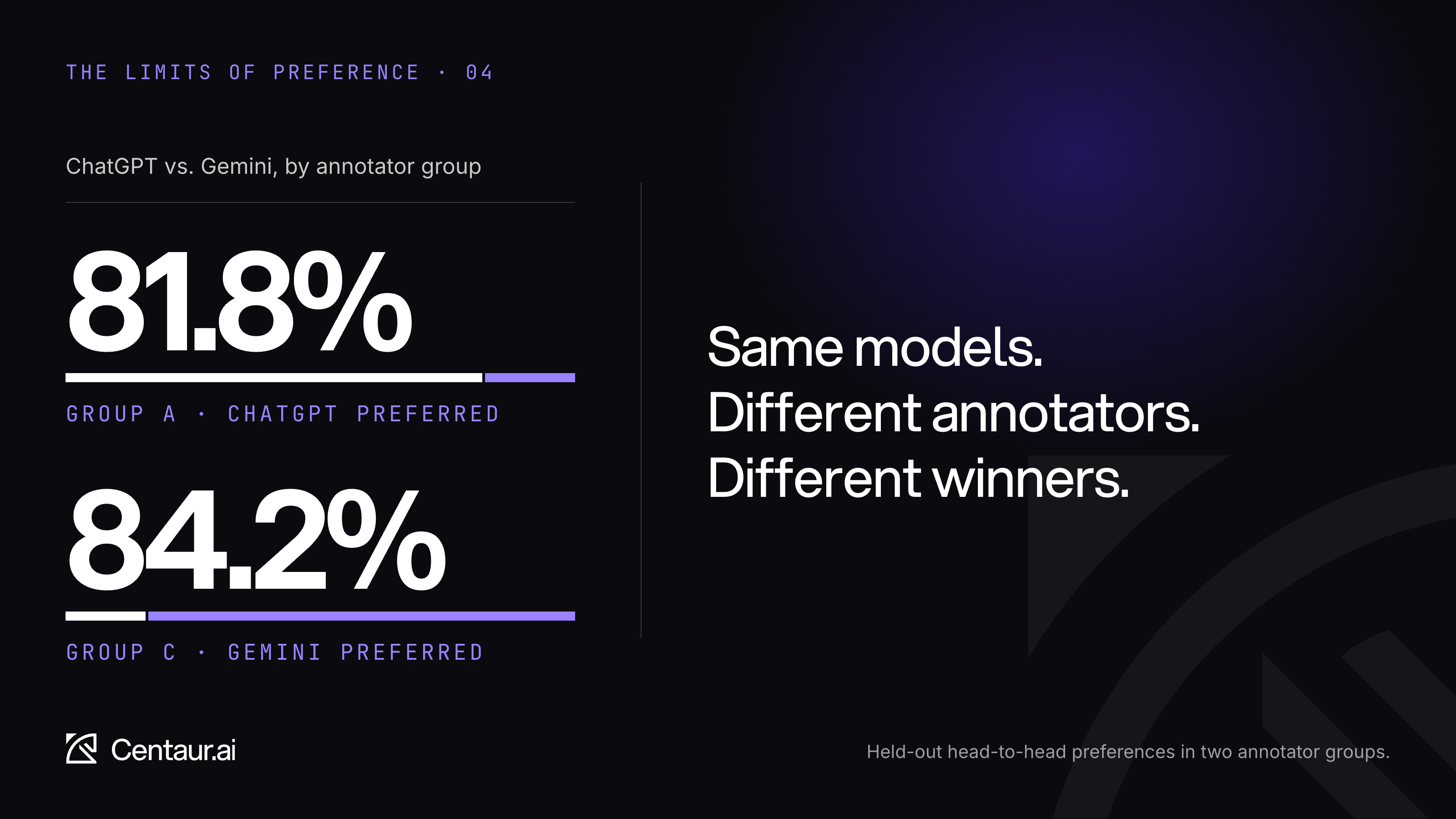
The most reliable datasets will emerge from systems where humans and machines work together, rather than in parallel silos. We will see more workflows in which models propose labels, experts challenge them, peers adjudicate disagreements, and performance is continuously measured. The value will not come from any single annotator but from the structured interaction between many perspectives.
This approach mirrors how progress happens in science: not through individual authority, but through structured disagreement, measurement, and refinement.
3. Annotation shifts to performance-based systems
Today, many organizations select annotators based on resumes, degrees, or professional titles. In 2026, that will increasingly be seen as insufficient. What will matter more is demonstrated accuracy on real tasks, consistency over time, and performance under complexity.
We will see broader adoption of evaluation frameworks that treat annotation as a measurable skill, not a static qualification. Systems that can identify top performers empirically, reward them appropriately, and continuously recalibrate quality will set the standard.
4. Competition becomes key component of expert labeling
One of the most underutilized levers in data quality today is structured competition. When annotators know their performance is being measured against peers, behavior changes. Effort increases. Precision improves. Overconfidence is tempered. Calibration becomes a habit rather than an aspiration.
By 2026, more organizations will intentionally design annotation environments that encourage competition among experts, not for speed, but for accuracy. The result will be datasets that are not only labeled, but stress-tested by the process that produced them.
5. Annotation will be recognized as infrastructure for trust
As AI systems are deployed into healthcare, finance, legal workflows, and safety-critical environments, annotation will no longer be treated as a preparatory step. It will be recognized as part of the trust layer that supports validation, auditability, and long-term credibility.
A recent article in Technet asserts that "over 90% of AI failures stem from poor data quality, causing hallucinations, bias, model drift, and compliance risks."
Organizations will seek partners and internal systems that can be trusted. These partners and systems must demonstrate how data was produced, how quality was measured, how disagreement was handled, and how performance was validated. Transparency in the data creation process will become a prerequisite for serious deployment.
Conclusion and Next Steps
The throughline across all five predictions is simple: better data leads to better models, and better data does not happen by accident. It emerges from intentional systems that prioritize measurement, structured collaboration, and continuous improvement.
In 2026, the organizations that internalize this reality will be the ones whose AI systems earn not just adoption, but trust.
For a demonstration of how Centaur can facilitate your AI model training and evaluation with greater accuracy, scalability, and value, click here: https://centaur.ai/demo