How High-Quality Annotation Powers the Next Generation of Radiology AI
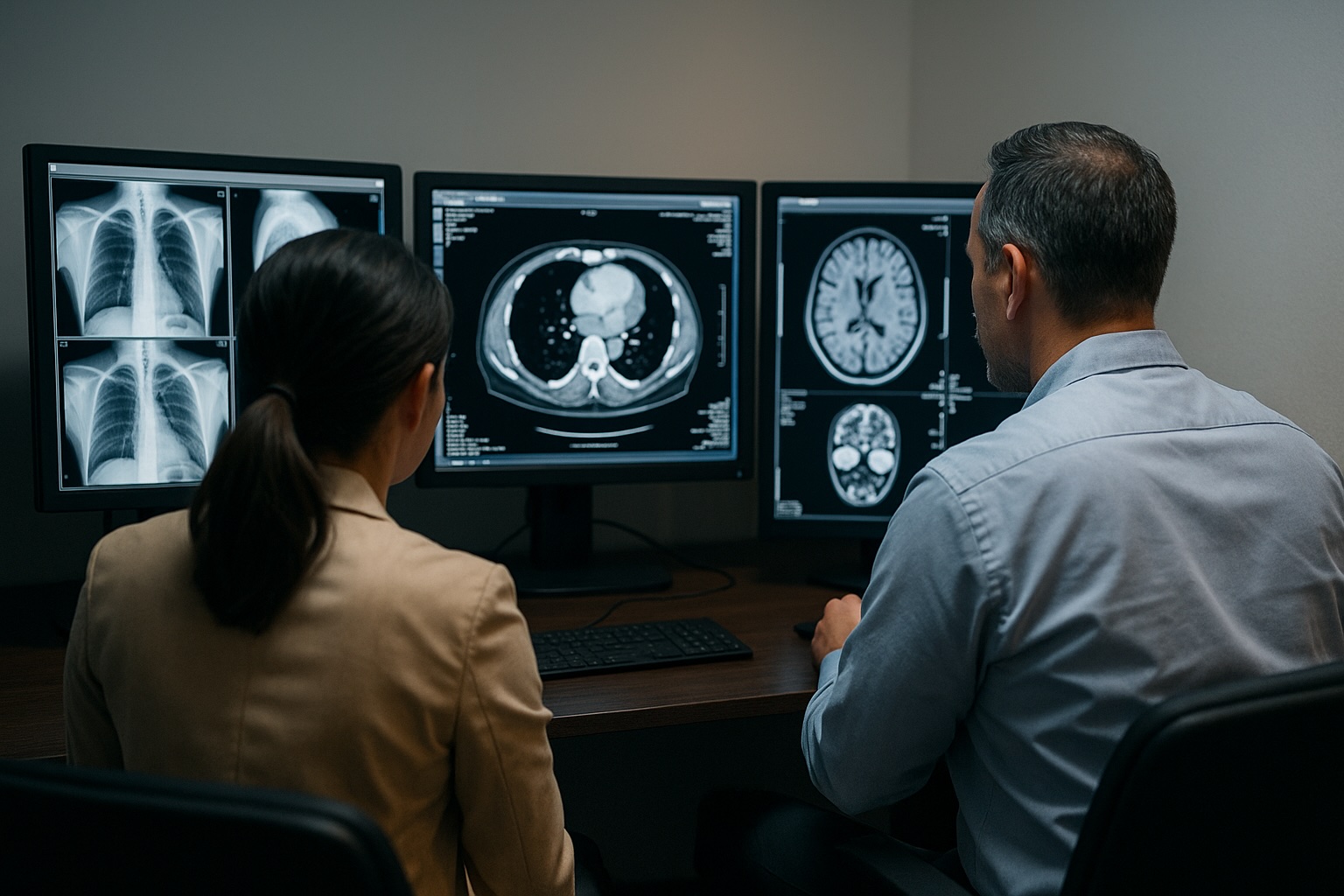
Radiology is undergoing a structural shift. Imaging volumes continue to rise, the complexity of scans has increased, and clinical teams face pressure to interpret more data in less time. These challenges have accelerated the adoption of AI across every step of the imaging workflow, from acquisition to final clinical insight. Yet the performance of these systems depends on one factor more than any algorithmic breakthrough: the quality of the data used to train and evaluate them.
The Expanding Demands of Radiology
Over the last decade, the number of CT and MRI scans per patient has increased, follow-up imaging is more common, and new protocols introduce additional sequences and parameters. Radiologists face an environment where workload is rising faster than the workforce. AI has become a practical necessity, not for replacing clinicians but for improving precision, efficiency, and throughput.
Where AI Improves the Imaging Pathway
AI now touches each stage of the radiology workflow.
Image Acquisition
Adaptive exposure controls, noise reduction, and motion detection help technologists capture cleaner images, reducing retakes and preventing avoidable downstream errors. Clean inputs lead to more reliable outputs.
Image Processing
AI accelerates reconstruction, normalizes contrast, and automatically segments structures. What once required repeated manual effort can now be completed in the background, freeing radiologists to focus on interpretation rather than mechanics.
Automated Interpretation
Systems can flag abnormalities, prioritize urgent studies, and surface critical findings such as hemorrhage or pneumothorax sooner. AI does not replace decision-making, but it ensures the right cases reach the top of the queue.
Human Review and Decision Making
With automated measurement tools and pre-flagged regions of interest, radiologists can move through studies more efficiently while maintaining full clinical control. This collaboration produces the most accurate results.
Reporting and Insight
Structured templates, automated measurements, and follow-up prompts improve report completeness and consistency. When thresholds are crossed, systems prompt radiologists to include clinically appropriate recommendations.
Longitudinal Monitoring
AI can compare current and prior studies, track subtle changes, and support clinicians managing chronic or progressive disease. These tools strengthen radiology’s role across the entire patient journey.
Why Data Quality Is the Determining Factor
The effectiveness of every AI system depends on the quality of the data used to train it. Low-quality annotations, inconsistent labeling standards, limited representation of scanners and populations, or gaps in rare conditions can distort a model’s understanding. A poorly annotated dataset will bias outputs, weaken generalization, and reduce clinical reliability.
High-quality radiology annotation requires multiple expert reviewers, clear instructions, rigorous quality control, consistent rules, and broad coverage across modalities and demographics. When these foundations are solid, model performance improves dramatically.
How Centaur.ai Supports High-Quality Radiology AI
Centaur.ai is designed specifically for healthcare data and built to produce clinically reliable ground truth. Our platform provides:
• Multi-reader expert reviews
• Strict QC loops
• Performance tracked annotators
• Healthcare native viewers
• HIPAA and SOC 2 Type 2 compliance
• Scalable workflows capable of millions of annotations per week
Teams working with Centaur.ai train models faster, achieve more generalizable performance, meet regulatory expectations with less friction, and improve real-world outcomes. Robust annotation is not glamorous work, but it determines whether radiology AI is safe, reproducible, and ready for clinical deployment.
Building Reliable Radiology AI
Successful adoption requires integration with PACS, RIS, and EMR systems; clear ROI evaluation; clinician trust; multi-site scalability; and continuous performance monitoring. These are long-term commitments, not one-time installations.
Radiology is becoming a data-driven specialty. Imaging is cleaner, triage is more intelligent, reports are more consistent, and long-term monitoring is more objective. This future depends not on algorithms alone, but on reliable data infrastructure. Groups that invest early in high-quality annotation will lead the next era of clinical imaging.
For radiology teams looking to build dependable AI pipelines, the starting point is simple: strengthen the data. Begin with high-quality labels, and everything that follows becomes stronger.
If your radiology AI pipeline depends on accurate ground truth, Centaur.ai is where quality becomes inevitable—not aspirational.
Schedule a demo with Centaur.ai